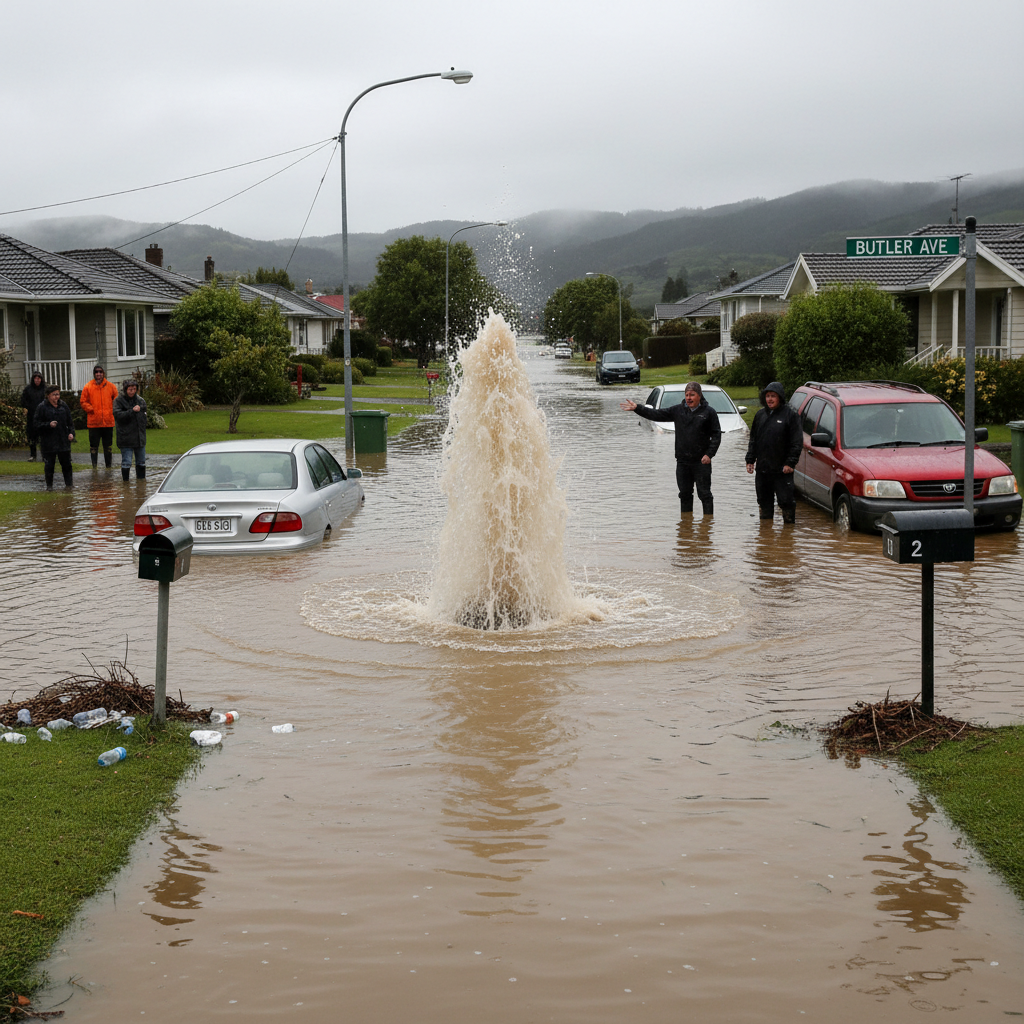
Residents in the Lower Hutt suburb of Stokes Valley awoke on Saturday morning to find their streets transformed into rivers, as intense overnight rain led to severe flash flooding.
The deluge, which began causing significant issues around 9 am, was reportedly worsened by a burst manhole. Video from the scene shows torrents of brown water cascading down residential streets, with parked cars submerged halfway up their tyres. The flooding has caused significant disruption for locals and raised concerns about the capacity of local infrastructure to handle extreme weather events.
One long-time resident, Eugene Grant, said a manhole on his street burst around 7:30 am, releasing a massive volume of water that quickly overwhelmed the local drainage system. The subsequent flooding turned roads into impassable waterways, trapping vehicles and inundating properties in low-lying areas of the valley.
MetService Warnings in effect as storm hits region
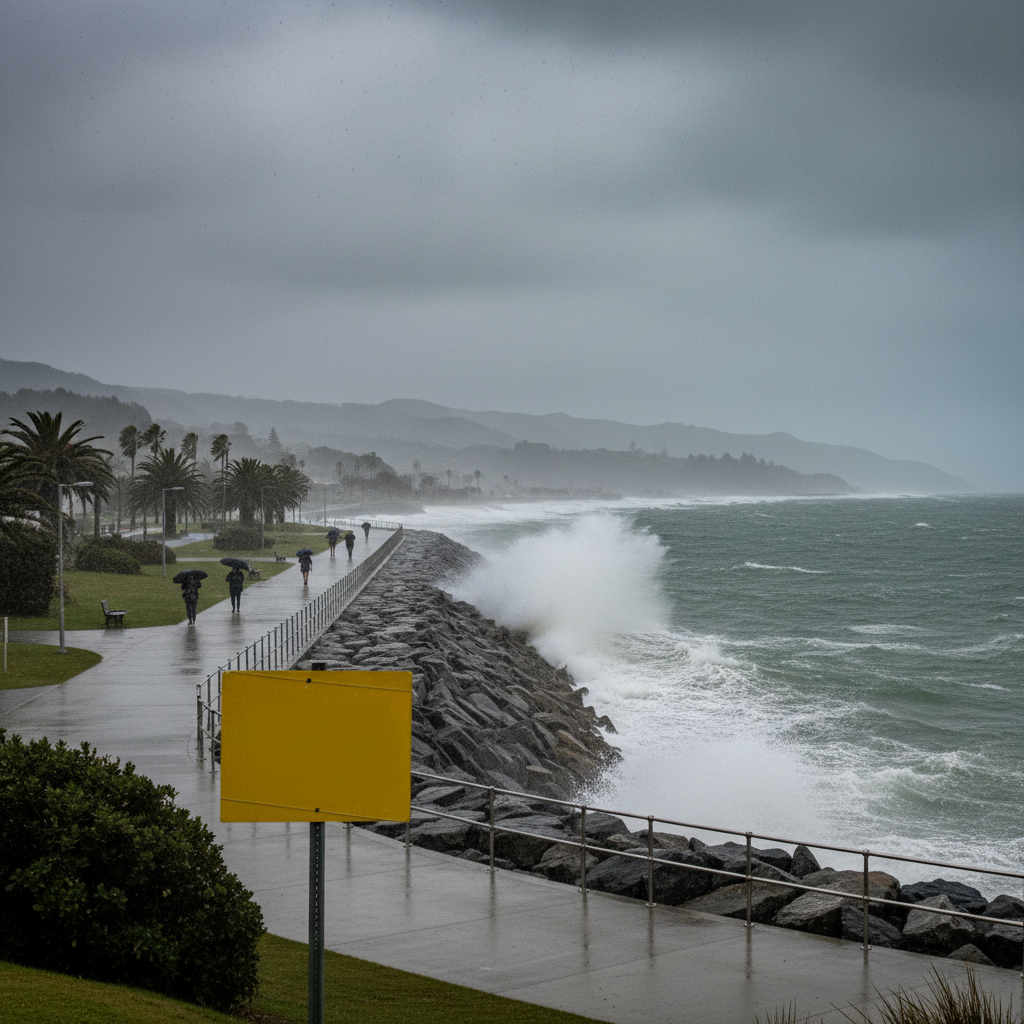
The flooding in Stokes Valley is part of a wider weather system that has been battering the Wellington region. MetService, New Zealand's national weather authority, had issued severe weather warnings for the area, forecasting heavy rain and potential flooding from Friday, April 17, through to Wednesday, April 22. Authorities have urged residents to remain vigilant and avoid non-essential travel.
The persistent downpour has caused problems across the capital. Earlier on Saturday, another Wellington highway was closed due to flooding, compounding travel woes for motorists already navigating treacherous conditions. These events highlight the vulnerability of the region's infrastructure to intense rainfall, a phenomenon that climate scientists predict will become more common in the coming years.
According to the Ministry for the Environment, climate change is expected to lead to more frequent and intense rainfall events across many parts of New Zealand, including the Wellington region. This places increasing pressure on stormwater and transport networks, many of which were designed for a climate of the past. For more information on local weather alerts, residents are advised to check the official MetService website.

Infrastructure under pressure from extreme weather
The bursting of a manhole in Stokes Valley points to a stormwater system that was unable to cope with the sheer volume of water from the storm. When rainfall intensity exceeds the capacity of pipes and drains, the system can become pressurised, leading to overflows from manholes and other outlets. This issue is a growing challenge for cities and towns across the country, not just Lower Hutt.
Local authorities like Hutt City Council and Wellington Water are responsible for managing and upgrading this critical infrastructure. However, keeping pace with the escalating impacts of climate change requires significant and sustained investment. The process often involves complex engineering studies to identify choke points in the network and prioritise upgrades, which can be both costly and disruptive.
While drainage and water infrastructure are a key priority, the council continues to invest in other major projects to improve the city. For instance, the new $82m Eastern Bays Shared Path recently opened to the public, providing a significant new recreational and transport link for residents.
Valley community hit by deluge
Stokes Valley, a suburb of over 10,000 people nestled between hills, is geographically susceptible to flash flooding. Heavy rain can run off the steep surrounding hillsides, funnelling water into the valley floor and quickly overwhelming natural and man-made drainage channels. Saturday's events serve as a stark reminder of this vulnerability.
The impact of such weather events is a national issue. In a similar recent event, a tornado struck Welcome Bay in Tauranga without warning, causing significant damage amid a bout of wild weather. These unpredictable and powerful events are testing the resilience of communities across New Zealand, showing how weather phenomena like the Welcome Bay tornado can strike with little}$.right}蔞call:insert_cross_link{paragraph_index:8,rewritten_paragraph:
For residents of Stokes Valley, the immediate future involves a significant cleanup effort as the floodwaters recede. Community spirit often shines through in the aftermath of such events, with neighbours helping each other to clear debris and assess damage. This spirit is a hallmark of many local suburbs, as seen in the success of ventures like the Wainuiomata garden group which helps cultivate community spirit.
As the cleanup begins, residents are being warned that more rain is on the way. The MetService severe weather warning remains in place until Wednesday, and authorities advise people to stay informed about conditions and to exercise caution, particularly in flood-prone areas.