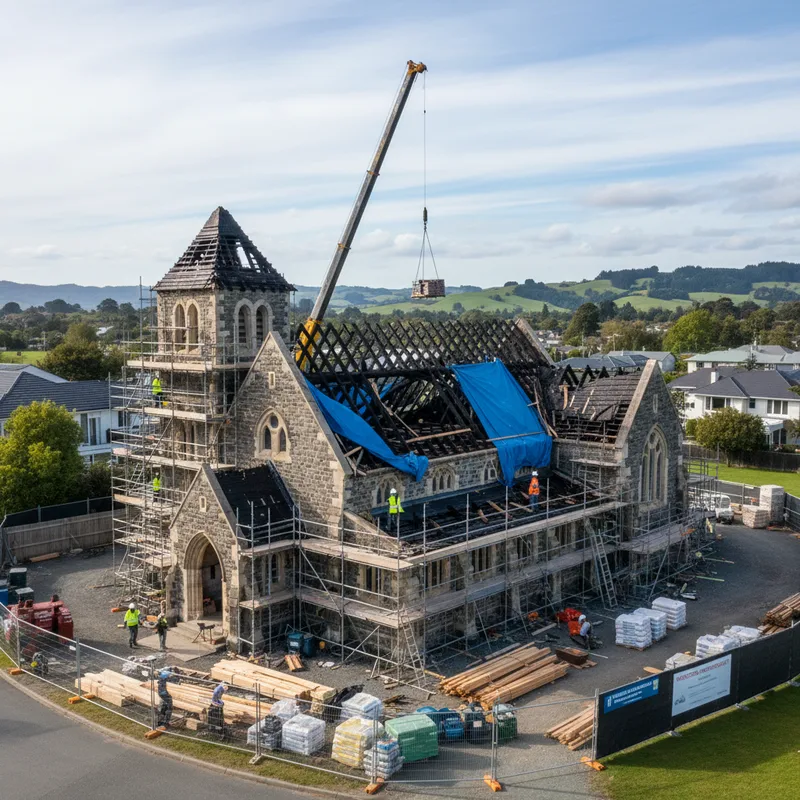
There is light at the end of the tunnel for a historic Masterton church community, more than a year after the building was severely damaged in an alleged arson attack. With planning permission now granted, the 115-year-old Anglican Church of the Epiphany is expected to be fully restored and reopened within the next three to four months.
The church has stood empty since February 22 last year, when it became one of five churches in the Masterton area targeted in a string of deliberately lit fires. A man is currently facing charges in relation to the alleged arsons.
People’s Warden for the parish, Paul Maguire, recalls receiving the shocking news in a 6am phone call. “It's devastating, really. Your heart sinks when you hear news like that, you don't know what to think,” he says. “All I was told on the phone was, ‘There's been an arson attack at the church, can you get down here?’ So, I didn't know whether the church was on the ground or partly damaged.”
Damage and disbelief
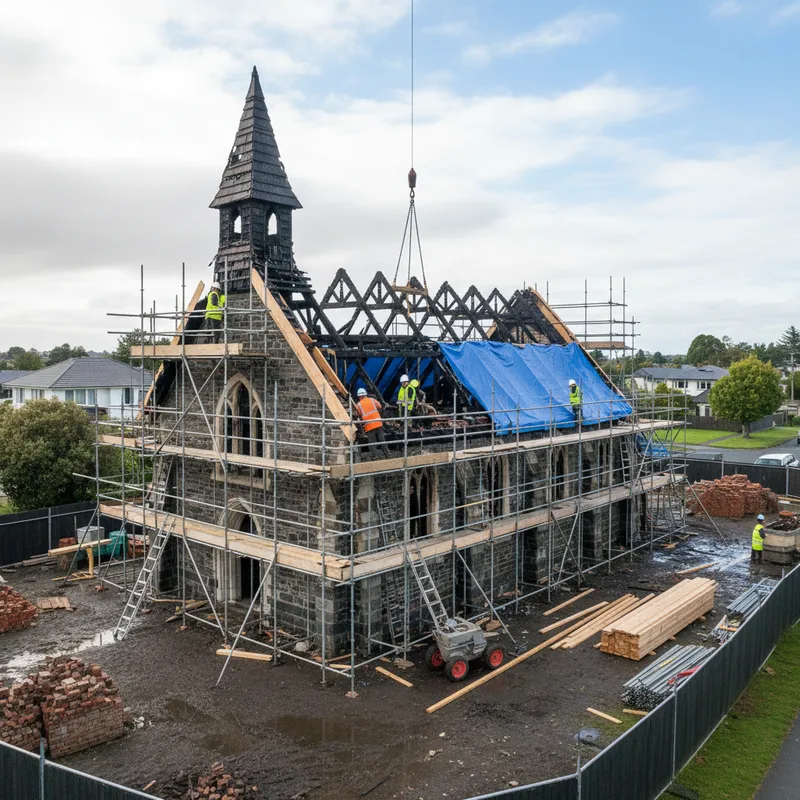
While the church was not destroyed, the damage was significant. The foyer was the worst-hit area, the entire length of the roof was left blackened, and essential infrastructure was destroyed. Claire Marara, who was a warden at the time and is now project managing the rebuild, says the fire wiped out all the audio-visual equipment, wiring, and heating systems.
The incident sent shockwaves through the tight-knit Wairarapa community. “For a lot of our parishioners, there was a lot of tears shed when they came down. I think it was just that shock and disbelief that something like that would happen in our sleepy little community," Marara says.
The initial response demonstrated the community's solidarity. "It was really heartwarming. I think that first morning… we had just members of the public and people from other churches just stopping, coming to offer support, builders turning up to see if they could help," Marara recalls.
The long road to restoration
Restoring a heritage building, originally constructed in 1911, has presented unique challenges. The project requires sourcing native rimu timber to match the original materials, a difficult and costly task. Maguire notes the complexity of returning the building to its former glory while adhering to modern standards and preserving its historical character.
Although insurance has covered the primary fire damage, the parish faced a $20,000 shortfall to fund essential exterior work needed for a complete restoration and to future-proof the building. The community has stepped up to bridge this gap, donating generously through a Givealittle page and direct contributions.
So far, fundraising efforts have raised $4,495 online, and a further $5,000 was donated directly, putting them almost halfway towards their goal. This outpouring of support reflects the building's importance to generations of local families.
'The church is not the building'
For 14 months, the congregation has held its services in the hall of the nearby Hadlow Preparatory School. The closure has been felt deeply, not just by parishioners but by the wider community who used the space. The church regularly hosted a local fruit and vege co-op, men’s breakfasts, and women’s social events, all of which have been on hold.
The loss has been particularly poignant for families who could not hold funeral services for loved ones in the church. “Sadly, over these last 14 months, some of those older people have passed away. Part of their life was wanting to have their funeral service at Epiphany, and they couldn’t, which must have been hard for the families, and it’s been hard for us," Maguire says.
The situation underscores the vital role community hubs play, and the challenges they face, a theme that resonates across the Wellington region, including in Lower Hutt where some essential organisations like a local parenting service have faced their own funding crises. As Marara says, the community has always been quick to remember that "the church is not the building, it’s the people.”
A school loses its chapel
The church’s closure has also profoundly impacted the daily life of Hadlow Preparatory School, which has used Epiphany as its chapel since the school was founded in 1929. Principal Andrew Osmond says the weekly Monday morning walk to the church was a grounding ritual that has been sorely missed.
When we finally go back, I know the first service will be a big moment. It won’t just be a building reopening. It’ll be a part of our identity snapping back into place.
Osmond explains that while the school hall is functional, it lacks the spiritual and historical weight of the church. The arson attack also prompted difficult questions from children, some of whom were shaken by the loss of a familiar place. An entire cohort of new students has never even been inside, making the eventual return a moment of discovery for them.
Heritage, identity and a city's soul
The devastating fire and the passionate community response in Masterton serve as a powerful reminder of the value of heritage buildings across New Zealand. Much like Masterton, Lower Hutt has a rich history, with its council and community groups actively exploring ways to protect and celebrate defining local sites. Discussions around heritage, such as those in a recent Hutt City Council webinar, highlight that these places are not just brick and mortar but are deeply woven into a city’s identity and soul.
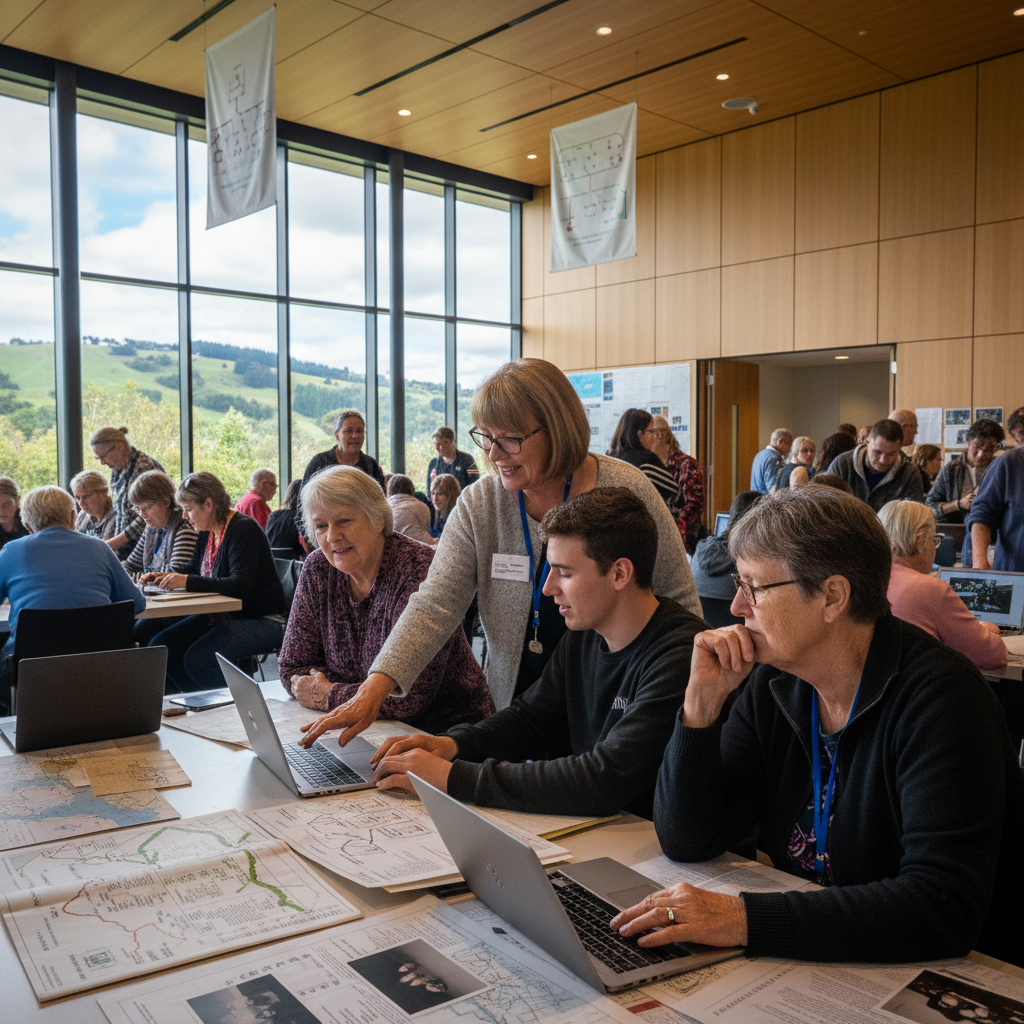
These buildings connect us to our past and provide a sense of place. Community-led initiatives, such as free sessions to uncover family histories in Wainuiomata, often rely on such venues to bring people together. The strong arts and culture scene in the region, recently highlighted by Wellington artists dominating a national portrait award, is nurtured in these community spaces. The resilience shown in Masterton offers an inspiring example for any community facing adversity, whether it be from deliberate destruction, funding cuts, or natural events. The Tacoma Narrows Bridge reopening after repairs, or the flash flooding that recently hit Stokes Valley, highlight community vulnerability. The immediate outpouring of support for the church shows a collective understanding that losing such a place means losing a piece of the community itself.
For Paul Maguire, his connection to the church began before he was born, with his parents marrying there. "It's been part of my life always," he says. For Claire Marara, who moved to the town six years ago, it was the place her children "felt most welcomed."
With the restoration work finally underway, a sense of optimism has returned. "Everybody is just really looking forward to it. There was probably a period where we wondered if it would ever happen,” Marara says. Maguire adds, “There’s a lot of anticipation now that things will happen. And yeah, we’ll be back, because they want to be back."