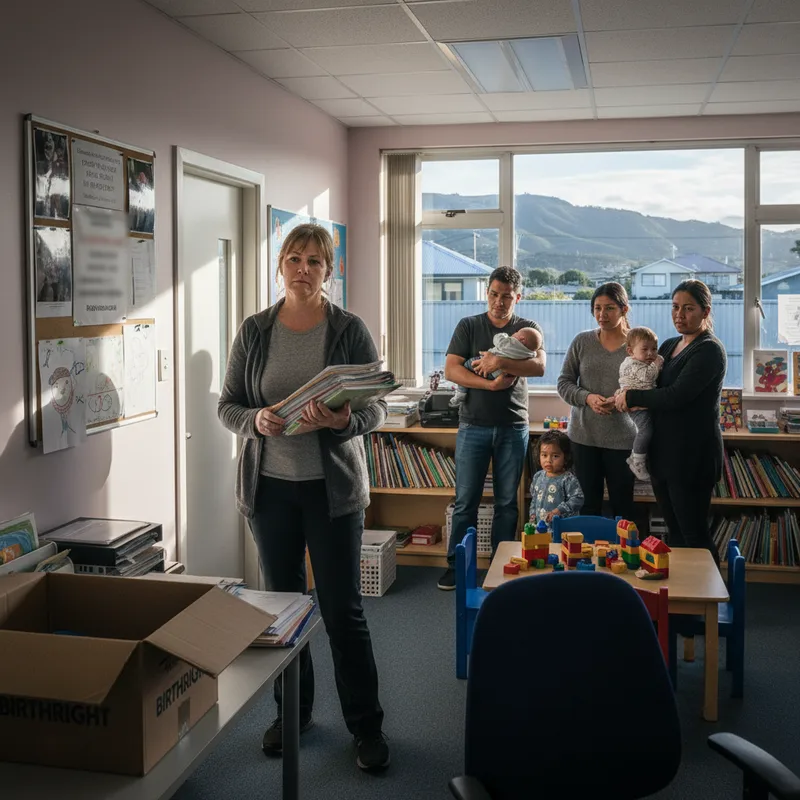
A vital parenting support service in Lower Hutt is on the brink of collapse, with Birthright proposing to shut down its Hutt Valley branch. The organisation says it can no longer sustain its operations due to a critical funding shortfall, a move that advocates warn would leave a significant gap in support for local families.
The core of the issue lies with government funding that has failed to keep up with spiralling operational costs. According to Birthright, its funding from Oranga Tamariki, the Ministry for Children, has remained stagnant for the past three years. During this same period, the cost of delivering services, including staffing, rent, and resources, has steadily increased, creating an unsustainable financial situation.
The Public Service Association (PSA) has been quick to condemn the situation, placing the responsibility squarely on the government. PSA National Secretary Fleur Fitzsimons says the proposed closure is a direct result of a failure to provide adequate financial support for essential community services.
A crucial support network for local families
Birthright provides a lifeline for many parents, offering a range of services aimed at improving family wellbeing and providing support to those in need. While specific programmes vary, organisations like Birthright typically offer practical assistance, parenting education, and crucial emotional support, particularly for single-parent households. The closure would sever this connection for potentially hundreds of families across the Hutt Valley.
The Government hasn't provided the funding necessary.
The loss of such a service could have significant downstream consequences. Without this preventative support, more families may find themselves in crisis situations, placing additional strain on other government agencies, including the already pressured health and emergency housing sectors. For parents and children who rely on the service, the closure represents the loss of a trusted community hub and a safe space to seek help and connection.
The timing of the proposed closure is particularly concerning, as the wider health system is already bracing for the annual spike in demand during the winter months. Removing a key community support plank could exacerbate challenges for vulnerable families already dealing with issues like inadequate housing and the rising cost of living, issues that often become more acute in winter.
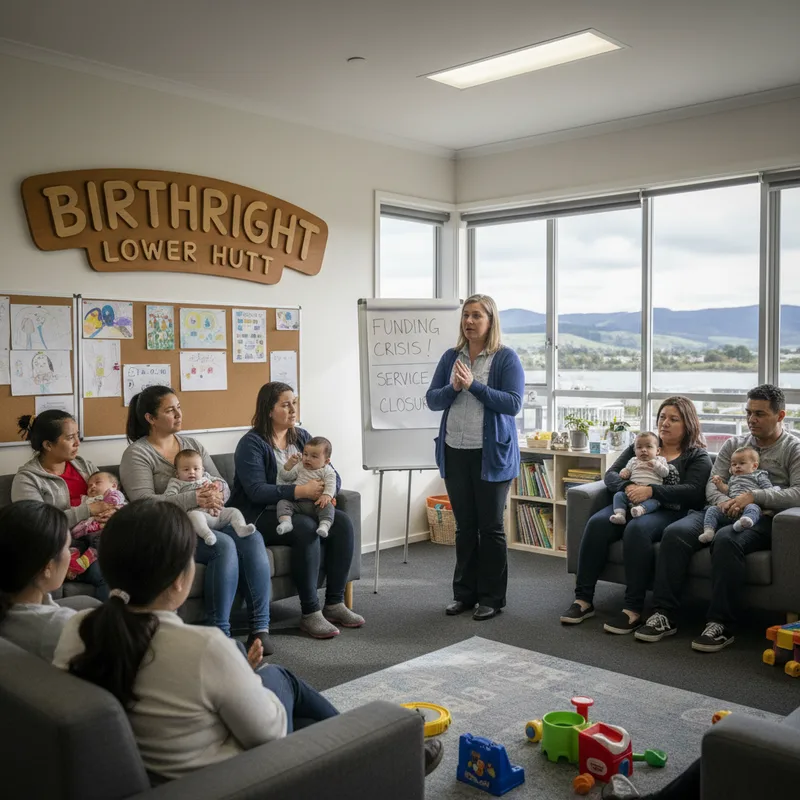
A shift from institutional care to community support
The potential loss of Birthright's local branch also raises questions about the future of community-based social care in the region. The Hutt Valley has a long and complex history of social support, which has evolved significantly over the decades. In the mid-20th century, care was often provided in large institutions. The Good Shepherd Sisters, for example, ran a hostel for young, unmarried expectant mothers in Waiwhetu from 1966, having previously operated facilities in Upper Hutt.
This model of institutional care has since been replaced by a community-focused approach, with organisations like Birthright and Parents Centres aiming to support and empower families in their own homes and neighbourhoods. This shift began in the post-war era, with groups like the Wellington-based Parents Centre, founded in 1952, advocating for parent-led education and support against a backdrop of rigid, institutionalised medical practices.
These community organisations became the backbone of preventative social care, run largely by volunteers and small teams of dedicated staff. However, their reliance on government contracts and philanthropic funding leaves them vulnerable, as seen in Birthright's current predicament. The closure would not only be a blow to current families but also a setback for the modern model of community-based care that has been built over the past 70 years.
Wider pressures mount on Hutt Valley services
The funding crisis facing Birthright does not exist in a vacuum. It comes as the Wellington region grapples with numerous social and economic pressures. Just recently, local MPs were demanding emergency funds to deal with the aftermath of severe flooding, highlighting the strain on public resources. Similar issues exist in health services, where Health NZ seeks allied health leader.
Furthermore, public services across the country are facing challenges. The struggle to maintain adequate service levels is a theme echoed in other sectors, with the Police Commissioner demanding answers over falling recruit numbers. For community organisations, which often operate on thin margins, these wider economic pressures and shifts in government spending priorities can be the difference between survival and closure.
The work of Oranga Tamariki, the agency whose funding levels are at the heart of the issue, is to ensure the wellbeing of children. Critics argue that allowing a key partner in preventative care like Birthright to close runs counter to this mission, potentially leading to worse outcomes for children and families down the line.
The proposal to close the Hutt Valley branch remains on the table, but the fight to save it has begun. Fleur Fitzsimons and the PSA are adamant that the service is too valuable to lose. The future of Birthright in Lower Hutt now depends on whether a funding solution can be found to allow it to continue its vital work supporting families in the community.